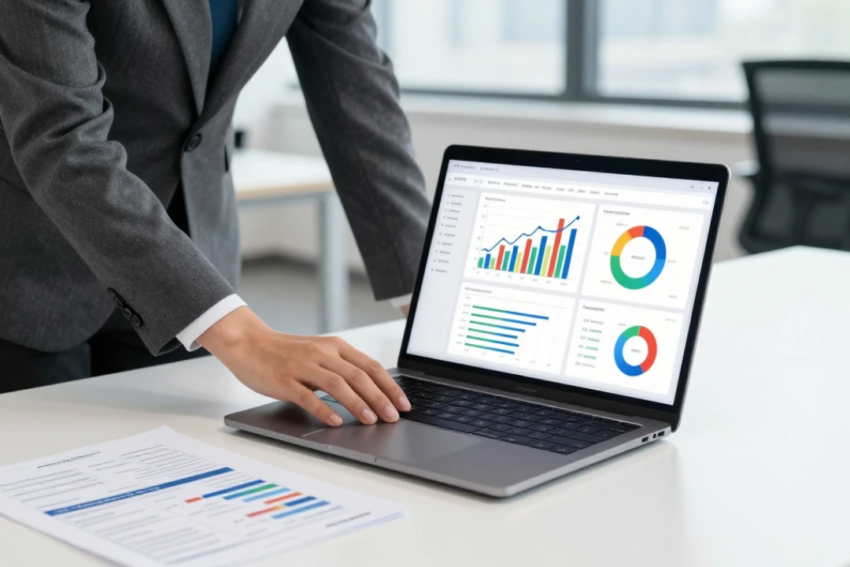
Introduction to Data Analytics
In the modern digital era, businesses generate massive amounts of data every day. From customer purchases and website visits to social media interactions and financial transactions, every activity creates valuable information. However, data alone does not provide benefits unless it is properly collected, analyzed, and transformed into meaningful insights.
This is where data analytics plays an important role. Data analytics helps businesses examine large volumes of information, identify patterns, understand customer behavior, improve operations, and make smarter decisions. Companies across industries are using data analytics to gain a competitive advantage and achieve long-term growth.
This complete data analytics guide explains what data analytics is, why it is important, different types of data analytics, the tools businesses use, and how organizations use data to make better decisions.
What Is Data Analytics?
Data analytics is the process of collecting, organizing, processing, and analyzing data to discover useful information and support decision-making. It involves using statistical methods, technology, and analytical techniques to understand past performance and predict future outcomes.
Businesses use data analytics to answer important questions such as:
- What products are customers buying?
- Why are sales increasing or decreasing?
- Which marketing campaigns are most effective?
- How can business operations be improved?
- What trends will impact the future?
By finding answers to these questions, companies can reduce risks, improve efficiency, and create better strategies.
Why Is Data Analytics Important for Businesses?
Data has become one of the most valuable resources for modern organizations. Businesses that know how to analyze and use data effectively can make faster and more accurate decisions.
1. Better Decision Making
One of the biggest advantages of data analytics is that it helps companies make decisions based on facts rather than guesses. Instead of relying only on experience or assumptions, businesses can use real data to understand market conditions, customer needs, and operational challenges.
For example, a retail company can analyze sales data to determine which products are performing well and adjust its inventory accordingly.
2. Understanding Customer Behavior
Customers generate valuable data through online searches, purchases, reviews, and interactions. Data analytics helps businesses understand customer preferences, buying habits, and expectations.
With this information, companies can provide personalized recommendations, improve customer service, and develop products that better match customer needs.
3. Improving Business Performance
Data analytics helps organizations identify problems and discover opportunities for improvement. By analyzing operational data, businesses can reduce costs, increase productivity, and improve overall performance.
For example, manufacturing companies can use analytics to identify production issues and reduce equipment downtime.
4. Predicting Future Trends
Businesses can use historical data to predict future outcomes. Predictive analytics allows companies to forecast sales, customer demand, market trends, and potential risks.
These predictions help businesses prepare better strategies and make proactive decisions.
Types of Data Analytics
Data analytics can be divided into four main types. Each type helps businesses understand different aspects of their operations.
1. Descriptive Analytics
Descriptive analytics focuses on understanding what happened in the past. It analyzes historical data and provides reports, dashboards, and summaries.
Examples include:
- Monthly sales reports
- Website traffic analysis
- Customer purchase summaries
Businesses use descriptive analytics to understand previous performance and identify patterns.
2. Diagnostic Analytics
Diagnostic analytics explains why something happened. It goes beyond basic reporting and investigates the reasons behind specific results.
For example, if a company experiences a decrease in sales, diagnostic analytics can help identify whether the cause was pricing changes, customer behavior, competition, or marketing issues.
3. Predictive Analytics
Predictive analytics uses statistical models and machine learning techniques to predict future events.
Businesses use predictive analytics for:
- Sales forecasting
- Customer behavior prediction
- Risk assessment
- Demand planning
For example, an online store can predict which products customers are likely to purchase based on previous behavior.
4. Prescriptive Analytics
Prescriptive analytics recommends the best actions businesses should take. It combines data analysis, artificial intelligence, and optimization techniques.
Examples include:
- Choosing the best pricing strategy
- Improving supply chain decisions
- Optimizing marketing campaigns
Prescriptive analytics helps businesses decide what actions will produce the best results.
How Businesses Use Data Analytics
Companies in almost every industry use data analytics to improve decision-making and achieve better results.
1. Marketing and Customer Analytics
Marketing teams use data analytics to understand customer interests and measure campaign performance.
Businesses analyze:
- Customer demographics
- Website activity
- Social media engagement
- Purchase history
This allows companies to create targeted marketing campaigns and deliver personalized experiences.
For example, e-commerce platforms recommend products based on customer browsing and purchase history.
2. Sales Optimization
Data analytics helps sales teams identify opportunities and improve revenue generation.
Companies analyze sales trends to determine:
- Which products are most profitable
- Which customers are most valuable
- Which regions have the highest demand
Sales analytics helps businesses focus their efforts on strategies that produce better results.
3. Financial Decision Making
Financial institutions and businesses use analytics to manage money more effectively.
Data analytics helps with:
- Fraud detection
- Budget planning
- Investment analysis
- Financial forecasting
Banks use advanced analytics to identify suspicious transactions and reduce financial risks.
4. Supply Chain Management
Supply chains involve many processes, including production, inventory, transportation, and delivery. Data analytics helps businesses optimize these activities.
Companies can use data to:
- Predict product demand
- Manage inventory levels
- Reduce delivery delays
- Improve supplier performance
This leads to lower costs and improved customer satisfaction.
5. Human Resource Management
HR departments use data analytics to improve employee management and recruitment.
Organizations analyze data related to:
- Employee performance
- Hiring trends
- Workplace satisfaction
- Staff retention
HR analytics helps companies make better decisions about workforce planning.
Popular Data Analytics Tools
Businesses use different tools and technologies to analyze data effectively.
Microsoft Power BI
Power BI is a popular business intelligence tool used for creating interactive dashboards and reports. It helps organizations visualize data and monitor important business metrics.
Tableau
Tableau is widely used for data visualization and business reporting. It allows users to convert complex datasets into easy-to-understand visual insights.
Excel
Microsoft Excel remains one of the most commonly used tools for basic data analysis. It provides functions, charts, and formulas for organizing and analyzing information.
SQL
SQL is a programming language used to manage and retrieve data from databases. It is essential for working with large amounts of structured data.
Python
Python is widely used in advanced data analytics because of powerful libraries such as Pandas, NumPy, and Matplotlib. It is commonly used for automation, statistical analysis, and machine learning.
Steps in the Data Analytics Process
A successful data analytics process usually includes several important steps.
1. Define Business Goals
The first step is identifying the problem or question that needs to be solved.
2. Collect Data
Businesses gather data from different sources, including databases, websites, applications, and customer interactions.
3. Clean and Prepare Data
Raw data often contains errors or missing information. Data cleaning ensures accuracy before analysis.
4. Analyze Data
Analysts use statistical methods and analytical tools to identify patterns and insights.
5. Visualize Results
Charts, dashboards, and reports make data easier to understand for decision-makers.
6. Take Action
The final step is using insights to create strategies and improve business performance.
Challenges of Data Analytics
Although data analytics provides many benefits, businesses may face some challenges.
Common challenges include:
- Poor data quality
- Data security concerns
- Lack of skilled professionals
- Difficulty managing large datasets
- Integration of multiple data sources
Companies must invest in proper technology, security measures, and employee training to overcome these challenges.
Future of Data Analytics
The future of data analytics is strongly connected with artificial intelligence, automation, and machine learning. Advanced analytics technologies are making it easier for businesses to process large amounts of information and discover valuable insights.
Real-time analytics, predictive models, and AI-powered tools will continue to transform how organizations operate. Companies that effectively use data analytics will be better prepared to compete in the digital economy.
Conclusion
Data analytics has become a powerful tool that helps businesses make smarter decisions, improve efficiency, and understand customers better. By analyzing data effectively, organizations can discover new opportunities, reduce risks, and create strategies based on accurate information.
From marketing and finance to healthcare and supply chain management, data analytics is changing the way businesses operate. As technology continues to advance, the ability to collect, analyze, and use data will remain a key factor in business success.
Businesses that embrace data analytics today will have a stronger position in the future by making faster, more informed, and more effective decisions.